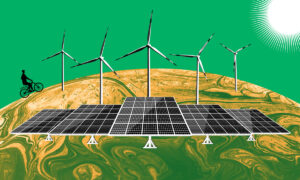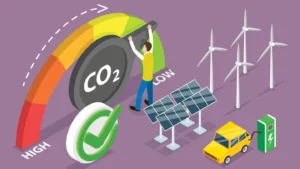

In the face of accelerating climate change and its associated challenges, the global community is increasingly turning to innovative solutions to secure a sustainable future. At the heart of this shift lies the development and deployment of revolutionary green energy technologies. These technologies are not only designed to reduce carbon emissions but also to transform how we produce, consume, and store energy. This article explores some of the most promising green energy technologies that are set to redefine our energy landscape.
Solar Power Innovations
Perovskite Solar Cells
Solar power has long been a frontrunner in the race towards renewable energy, and recent advancements in perovskite solar cells have amplified its potential. These cells, which are made from a variety of materials with a distinctive crystal structure, offer a cheaper and more efficient alternative to traditional silicon-based solar panels. The efficiency rates of perovskite cells have improved dramatically, reaching over 25% in laboratory settings. Their lightweight and flexible nature make them suitable for a range of applications, from building-integrated photovoltaics to wearable technology.
Bifacial Solar Panels
Another innovation in solar technology is the development of bifacial solar panels. Unlike conventional panels that capture sunlight from one side, bifacial panels collect solar energy on both sides, utilizing reflected sunlight from the ground or other surfaces. This design can increase energy yield by up to 20%, depending on environmental conditions. As the cost of bifacial panels continues to decrease, their adoption is expected to rise, especially in large-scale solar farms.
Wind Energy Breakthroughs
Floating Wind Turbines
Offshore wind farms have the potential to generate vast amounts of clean energy, but traditional fixed-bottom turbines are limited to shallow waters. Enter floating wind turbines, which can be deployed in deeper waters where wind speeds are higher and more consistent. These turbines are anchored to the seabed with mooring lines, allowing them to operate in depths of up to 800 meters. Countries like Norway and Japan are pioneering this technology, aiming to tap into the vast offshore wind resources available worldwide.
Vertical Axis Wind Turbines (VAWTs)
Vertical Axis Wind Turbines are gaining traction as an alternative to the traditional horizontal axis design. VAWTs have several advantages, including the ability to capture wind from any direction and a smaller footprint, making them ideal for urban environments. Recent advancements in materials and aerodynamics have improved their efficiency and reduced noise levels, making them a viable option for distributed energy generation in cities.
Energy Storage Solutions
Solid-State Batteries
Energy storage is a critical component of a sustainable energy system, and solid-state batteries are at the forefront of this revolution. Unlike conventional lithium-ion batteries that use liquid electrolytes, solid-state batteries utilize solid electrolytes, improving energy density and safety. These batteries are less prone to catching fire, have a longer lifespan, and can operate at wider temperature ranges. As production scales up, they are expected to play a pivotal role in electric vehicles and grid storage applications.
Flow Batteries
Flow batteries offer another promising solution for large-scale energy storage. They work by storing energy in liquid electrolytes contained in external tanks, which can be scaled up independently of the power-generating components. This flexibility allows flow batteries to provide long-duration storage, essential for balancing intermittent renewable energy sources like wind and solar. Industries and utilities are increasingly exploring flow batteries for their ability to deliver reliable and consistent energy over extended periods.
Hydrogen: The Fuel of the Future
Green Hydrogen Production
Hydrogen has emerged as a versatile energy carrier capable of decarbonizing sectors that are hard to electrify, such as heavy industry and long-haul transport. Green hydrogen, produced through electrolysis powered by renewable energy, offers a truly sustainable solution. Recent advancements in electrolyzer technology have improved efficiency and reduced costs, paving the way for widespread adoption. Countries like Germany and Australia are investing heavily in green hydrogen projects, aiming to become global leaders in this space.
Hydrogen Fuel Cells
Hydrogen fuel cells convert hydrogen gas into electricity, emitting only water vapor as a byproduct. This technology is particularly promising for transportation, offering a clean alternative to fossil fuels for buses, trucks, and even ships. Advances in fuel cell efficiency and durability, along with the development of hydrogen refueling infrastructure, are accelerating the adoption of hydrogen vehicles. The versatility of hydrogen fuel cells extends beyond transport, with applications in stationary power generation and backup power systems.
Emerging Technologies
Bioenergy with Carbon Capture and Storage (BECCS)
BECCS is an innovative approach that combines bioenergy production with carbon capture and storage technologies. By capturing and storing the carbon dioxide emitted during bioenergy generation, BECCS can achieve negative emissions, actively removing carbon from the atmosphere. This technology holds significant promise for mitigating climate change, and several pilot projects are underway to explore its feasibility and scalability.
Geothermal Energy
Geothermal energy, derived from the Earth’s internal heat, is a reliable and sustainable resource with vast untapped potential. Recent technological advancements have made it possible to exploit geothermal energy in areas with lower temperatures, broadening its applicability worldwide. Enhanced Geothermal Systems (EGS) and closed-loop geothermal technologies are breaking new ground, offering a sustainable solution for both electricity generation and direct heating applications.
Conclusion
As the world grapples with the urgent need to transition to a sustainable energy system, revolutionary green energy technologies are paving the way for a cleaner and more resilient future. From innovative solar and wind solutions to cutting-edge energy storage and hydrogen applications, these technologies are transforming how we think about and utilize energy. Continued investment in research and development, coupled with supportive policies and international collaboration, will be crucial in unlocking the full potential of these technologies and ensuring a sustainable future for generations to come.